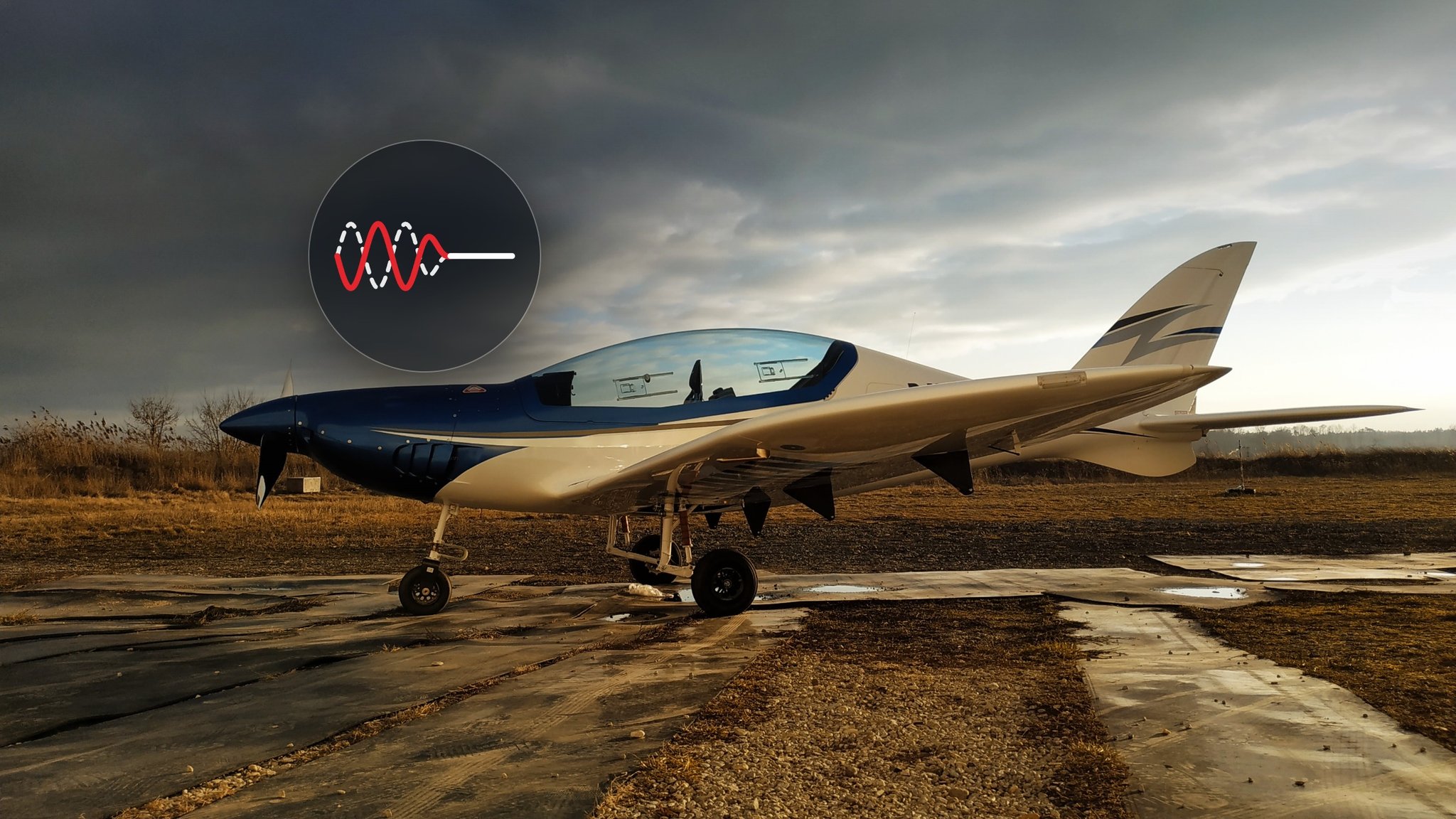
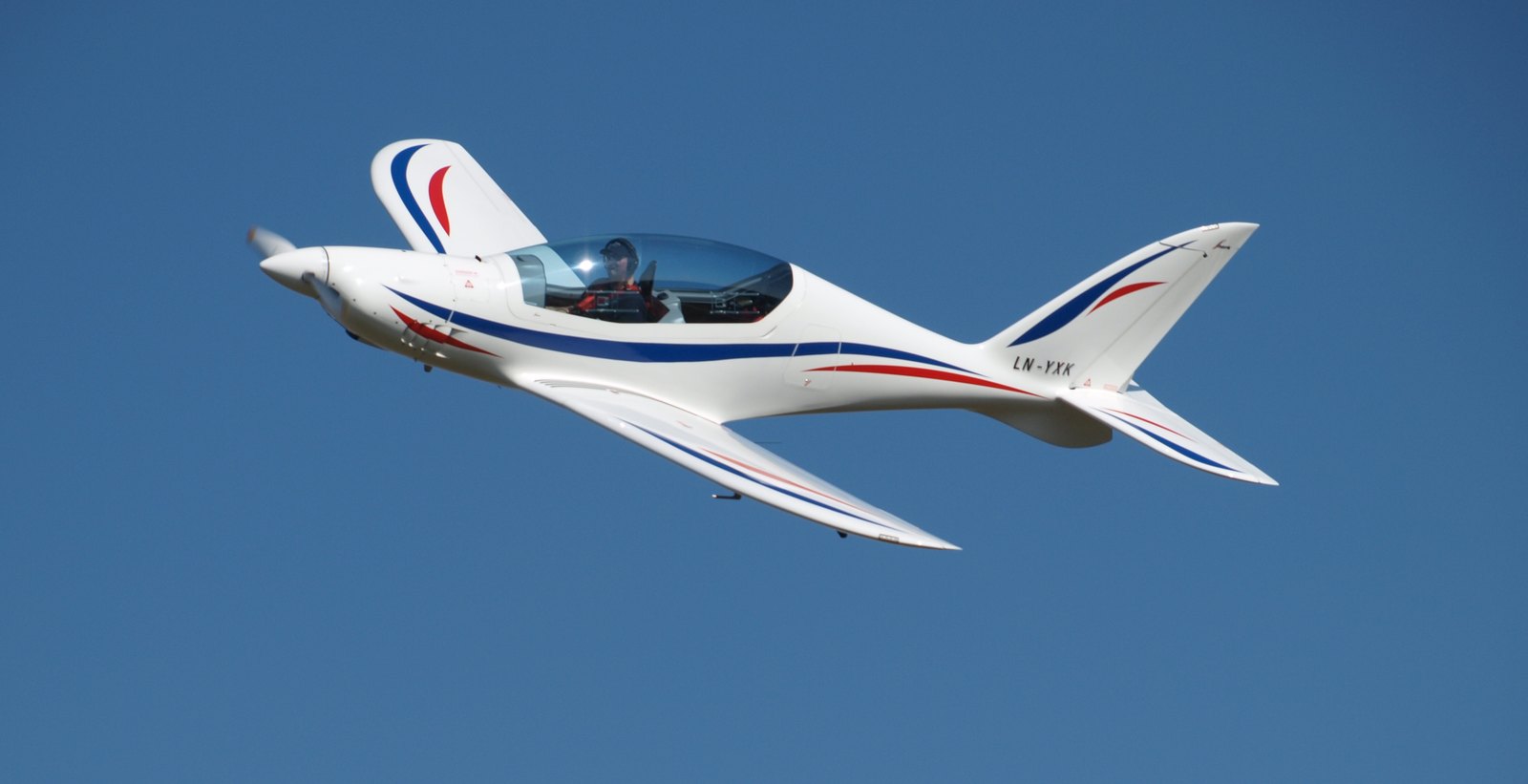
In brief: Turbulence Solutions, a company based in Vienna, has developed an active system that counteracts turbulence before it shakes the aircraft. It is called the Turbulence Cancelling System (TCS). The system received certification from the Austrian aviation authority (Austro Control) for the Shark 600 ultralight aircraft; the certification was announced in May 2026. The manufacturer states a 70–80% reduction in unpleasant vertical movements. For now, the Shark is the only aircraft on which TCS can be fitted.
- 70–80%less unwanted vertical motion (manufacturer’s data)
- ≈50 cmahead of the leading edge, where the sensor sits
- 3–5 / sflaplet movements
- 7 yearsof development, up to the May 2026 certification
What problem it solves
Turbulence is more than a matter of comfort. For passengers it means jolts and fear of flying, and for the pilot, constant corrections and fatigue. Revolution.aero magazine notes that the number of turbulence incidents has risen by more than 50% over the last four decades. The same publication estimates the annual costs to commercial aviation (compensation, fuel, diversions, delays, maintenance) at almost USD 2.6 billion.
Small aircraft are the most sensitive. The lower the mass relative to the wing area, the more strongly a gust of air moves the aircraft.
How TCS works, in three steps
The principle resembles that of active noise-cancelling headphones. The system does not wait for the disturbance; instead, it generates an opposing force in real time. According to Shark.Aero and Turbulence Solutions, it works in three stages:
- Measurement. A sensor mounted in front of the wing, about 50 cm ahead of the leading edge, detects disturbances in the airflow before they reach the wing.
- Calculation. A control unit (Flaplet Control Unit) calculates in real time how the aircraft would react and what aerodynamic force must be generated to counteract the movement.
- Counteraction. Small control surfaces integrated into the wing flaps, called “flaplets”, move 3–5 times per second. They change the shape of the wing locally, without rotating the whole aircraft.
| Item | Details |
|---|---|
| Developer | Turbulence Solutions, Vienna (Austria), a company that grew out of a research project at the Vienna University of Technology |
| Founder | András Gálffy |
| Certified aircraft | Shark 600, made by Shark.Aero (Senica, Slovakia) |
| Certifying authority | Austro Control (Austria’s civil aviation authority) |
| Certification announced | May 2026, after a seven-year development cycle |
| Reduction in the effect of turbulence | 70–80% of unwanted vertical motion (manufacturer’s data) |
| Sensor position | Approx. 50 cm ahead of the wing’s leading edge |
| Actuation frequency | 3–5 flaplet movements per second |
| Availability | Option for all new Shark aircraft, including the Shark 600 T (Turbo Shark), and an upgrade for existing Sharks |
What it means in flight
Shark.Aero says that, in turbulent air, a Shark with TCS active no longer behaves like a very light sport aircraft. The manufacturer’s analyses compare it with aircraft of about 3,000–5,000 kg. General Aviation News, quoting the company, puts the same point this way: the stability of an aircraft five times heavier. For the pilot, this means fewer control inputs and a lower workload. The manufacturer considers the system particularly useful for flights in mountainous areas.
A word of caution on the figures: the percentages and comparisons above come from the developer and from the aircraft manufacturer. As of the date of this article, we have not found a published independent evaluation.
Can it be fitted to any aircraft?
Not for now. Shark.Aero states that TCS is not a universal “retrofit” product. Every other aircraft type requires dedicated design, integration, flight tests and a separate certification. As of 2026, the Shark remains the only aircraft approved for this system.
In principle, the technology can also be fitted later, through a supplemental type certificate (STC). The technical condition mentioned by Turbulence Solutions is that the aircraft must have flaps, because the mechanism is integrated into them.
What comes next: from light aircraft to airliners and eVTOL
The company started with the ultralight segment because certification there is done at national level, which shortens the road to market. The announced stages are:
- Part 23 (small certified aircraft)The next stated step.
- Part 25 (airliners)In development; in 2024, the company estimated that it would need about EUR 60 million, with a timeframe in the 2030s.
- eVTOL and urban air mobilityIn development, with a variant that would adjust rotor speed for the turbulence between buildings.
Shark.Aero emphasises that the system differs from the one used on the Boeing 787. The aim is the same, but the operating principle and the architecture are different.
Frequently asked questions
What is the Turbulence Cancelling System (TCS)? An active system that measures turbulence in front of the wing and counteracts it in real time, through small control surfaces integrated into the flaps. It is developed by the Austrian company Turbulence Solutions.
By how much does TCS reduce the effect of turbulence? The manufacturer indicates 70–80% of unwanted vertical motion. The figures come from the company and have not yet been confirmed by an independent source.
Which aircraft is TCS certified on? The Shark 600, an ultralight aircraft made by Shark.Aero. The certification was issued by Austro Control and announced in May 2026. The system is also available as an option for the Shark 600 T.
Can I fit TCS to another aircraft? Not at present. Each new aircraft type requires its own development and certification. Fitting it later is possible in principle, through an STC, only on aircraft with flaps.
Will TCS also be available on airliners? The company is working on variants for airliners (Part 25) and for eVTOL. For large aircraft, in 2024 the company estimated a timeframe in the 2030s.
Sources
- Video: “The Technology Behind a Smoother Flight | Shark 600 TCS”, the Turbulence Solutions YouTube channel
- General Aviation News – Shark 600 Earns First Turbulence-Cancelling Certification (16.05.2026)
- Shark.Aero – Turbulence Cancelling
- Revolution.aero – Wind of no change: Exploring the promise of turbulence cancelling technology (16.09.2024)
Are you keeping an eye on new technologies in technical and research equipment? Contact the INOVUM team for information and quotes on laboratory, research and teaching equipment.