Drilling is a complex process and differs depending on the purpose of the borehole: it can be used to create a drinking water network for consumption or for household use (irrigation, washing vehicles, etc.). Because it can serve several purposes, a borehole comes in several sizes (diameter/depth, length of the filters), for each need and, more importantly, depending on the area.
To determine the water level accurately for any type of use, we need a single instrument: a water level meter.
Why it is so important to measure the water level regularly
It is important to check the water level in your well regularly, because this lets you identify and diagnose a serious problem long before it causes trouble, such as water interruptions or damage to the pump. In addition, state rules on drinking water require checks to keep statistical records of the water level in wells on a seasonal basis, including the periods when it is lower or higher.
The right time to measure the water level
In the part of the year when the most water is used, a weekly measurement is needed, and for the rest of the year at least a monthly one.
If these measurements are taken correctly and accurately with the level meter, data can be collected over time, revealing the trends in the water level in the well.
The water level meter
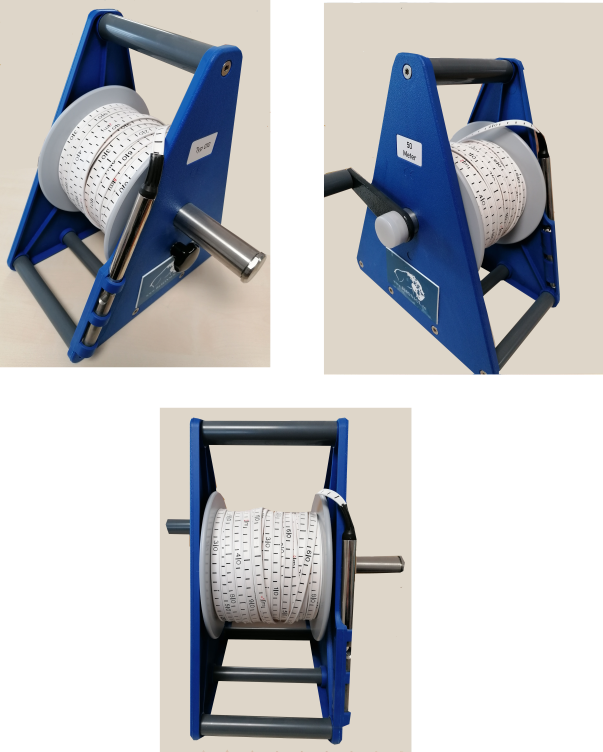
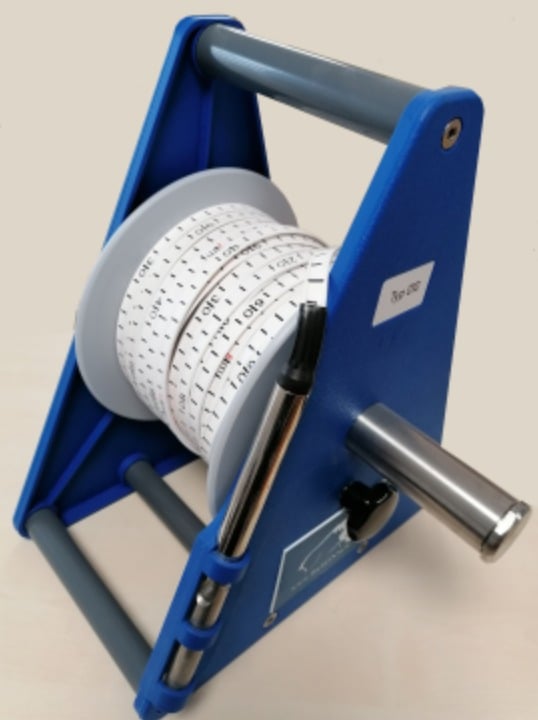
It consists of a drum supported by two plates of plastic that resists impact, abrasion and/or dirt. Apart from the electronic compartment in the axis of the drum, the rest of the construction is waterproof. The electronic compartment takes 3 C-type batteries. Opposite the batteries, at the end with the release/drive/retrieval handle, is the light signal.
When the probe touches the water, the indicator light comes on, and if the meter also has an acoustic sensor, it beeps.
How to operate it
To release the drum, loosen the locking knob on the side opposite the handle, below the battery axis.
Lower the probe into the well until the light signal comes on.
Lock the drum and read the depth on the scale, at the point where the scale enters the well.
If the meter has a bottom probe, after reading the water level, keep lowering the probe into the well until the light signal goes out.
Read the new depth on the scale.
Using the handle, wind the scale back onto the drum.
For transport, insert the probe into the special slot on the side of the meter.