If the control software no longer starts and the spare parts no longer arrive, does the laboratory equipment become an expensive paperweight?
In brief: In recent years, decisions taken in the US have cut off, overnight, the access of some users outside the US to e-mail, software and artificial intelligence models, including in EU Member States and in international institutions in The Hague. On Thursday, 12 November 2026, a Microsoft outage left users in more than 70 countries without e-mail, with no political decision involved. For a university buying a piece of research equipment worth tens to hundreds of thousands of euros, the practical question is simple: how many links in its operation depend on a jurisdiction or a server that the university does not control?
- 7 casesdocumented, from 2019 to 2026
- 74 countriesaffected by the Microsoft outage of 12 November 2026
- 4 monthsduring which Romania was a “Tier 2 partner” for AI chips
- 7 questionsto ask the supplier before purchase
Why we are asking this question
The number of cases, ranging from minor to major in impact and severity, has kept growing lately, and the decisions do not come from any one political camp, however reassuring it would be to believe that.
A modern piece of laboratory equipment is no longer just hardware. It runs on licensed software, a user account and firmware updates, sometimes with a cloud connection and proprietary consumables. Each of these elements is a contract with someone, and that someone is subject to the laws of the state where it is based.
As long as relations are stable, nobody notices this. Let us not forget, however, that, out of fear of betrayal, allies too may spy on each other. A recent case comes from Hungary: ahead of the April 2026 elections, intercepted calls between Foreign Minister Péter Szijjártó and his Russian counterpart, Sergei Lavrov, were leaked. In any other situation, such acts would have been treated as unfriendly; in our opinion, Hungary’s leadership did not handle the situation well, and on 12 April 2026 the governing party, Fidesz, lost the elections.
The question is very topical: even if we are allies, shouldn’t we have maximum cover with respect to companies that are far away from us? The cases below show what happens when those who claim to be our friends are not friendly.
The timeline: seven documented cases
- October 2019Adobe announces the deactivation of the accounts in Venezuela, citing a US executive order; it reverses course after receiving a licenceWho was affected: All Adobe users in Venezuela
- 2024–2026Acceptance of the IAR-99 SM aircraft upgraded in Craiova stalls because of security components reserved for NATO and a piece of American equipment that had not been contractedWho was affected: Romanian Air Force, Avioane Craiova
- 16.01.2025The US introduces export controls for certain biotechnology laboratory equipmentWho was affected: Exports of certain flow cytometers and mass spectrometers
- January–May 2025The “AI Diffusion Rule” places Romania and other EU states in the second tier of access to AI chipsWho was affected: EU Member States, including Romania and the Czech Republic
- February–May 2025US sanctions against the then Chief Prosecutor of the International Criminal Court, Karim Khan; he loses access to his Microsoft e-mailWho was affected: International Criminal Court, The Hague
- 12.06–30.06.2026An export control directive cuts off foreign nationals’ access to two American AI modelsWho was affected: All users of those models, worldwide
- 12.11.2026Global Microsoft 365 / Outlook / Teams outageWho was affected: Users in more than 70 countries
1Adobe and Venezuela (2019): a paid licence does not guarantee access
In August 2019, the US issued Executive Order 13884 on Venezuela. Adobe interpreted the order as prohibiting almost any transaction with Venezuela and announced that it was deactivating all accounts in the country, with a deadline of a few weeks for downloading files. Initially, the company said it could not refund the money paid for subscriptions. After the public reaction, it reversed course and announced refunds for customers who had bought directly from Adobe. At the end of the month, after receiving a licence from the US government, Adobe reversed its decision and restored access.
The important detail: the order targeted the Venezuelan government, not ordinary citizens. Even so, an American company chose a broad interpretation, to be sure that it was complying with the law. Other American providers acted differently. For the user, then, the outcome depends not only on the law, but also on how cautious the provider’s legal department is.
2The Romanian case: the IAR-99 SM aircraft in Craiova (2020–2026)
The example closest to a laboratory in Romania comes not from politics, but from the supply chain. In August 2020, the Ministry of National Defence signed a contract of about EUR 55 million with Avioane Craiova to upgrade 10 IAR-99 training aircraft, on which future F-16 pilots were to train. The avionics were supplied by the Israeli company Elbit Systems.
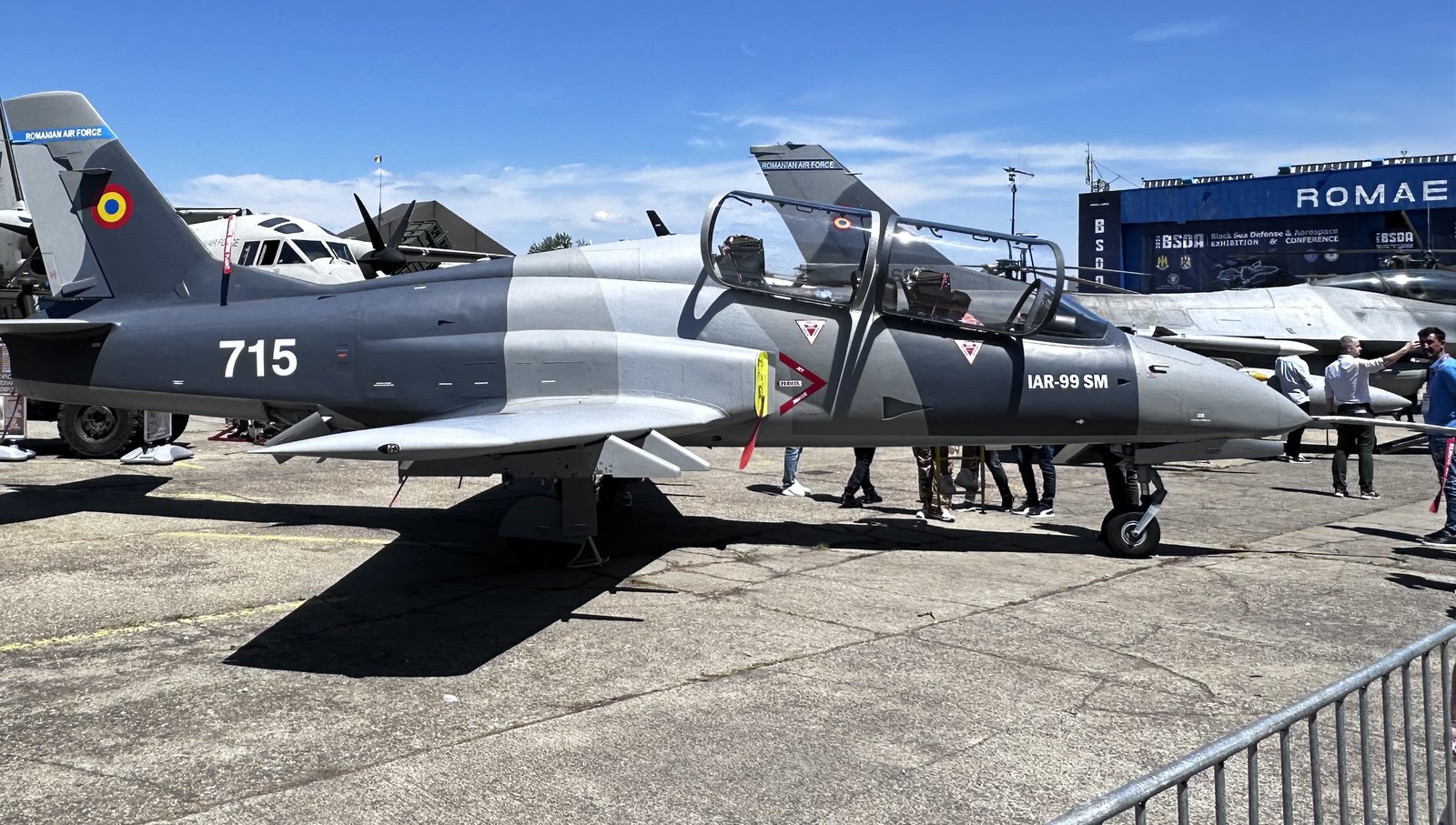
The project stalled at two points. The first: the aircraft needed anti-jamming software with military security functions, which, according to the factory’s former director, the Israeli supplier could not produce, as it was not a NATO member. The problem was later resolved. The second: acceptance remained blocked because a piece of equipment made by the American company Honeywell had not been contracted and integrated into the project in time. The ministry refused to accept the aircraft without it.
The result: aircraft ready to fly but not accepted, penalties of about EUR 28,000 a day for the factory and pilots sent abroad for training. In August 2026, the first two aircraft were announced as due to be delivered within a few weeks, almost two years after the contractual deadline.
A related case: the delivery of the 32 F-16 aircraft bought by Romania from Norway was delayed and, according to the specialist press, one of the reasons was that the manufacturer gave Ukraine priority for spare parts.
The lesson for any technical purchase is the same: a piece of equipment works only if all of its critical components can be delivered, authorised and integrated.
The weakest link in the chain decides the acceptance date.
3Export controls even for laboratory equipment (2025)
On 16 January 2025, the US Department of Commerce’s Bureau of Industry and Security (BIS) introduced export controls for certain laboratory instruments: high-performance flow cytometers and cell sorters (spectral, or with at least 26 detectors or channels) and certain mass spectrometers coupled with liquid chromatography, designed for proteomics. The official argument: these instruments generate biological data that can feed AI models with dual-use potential.
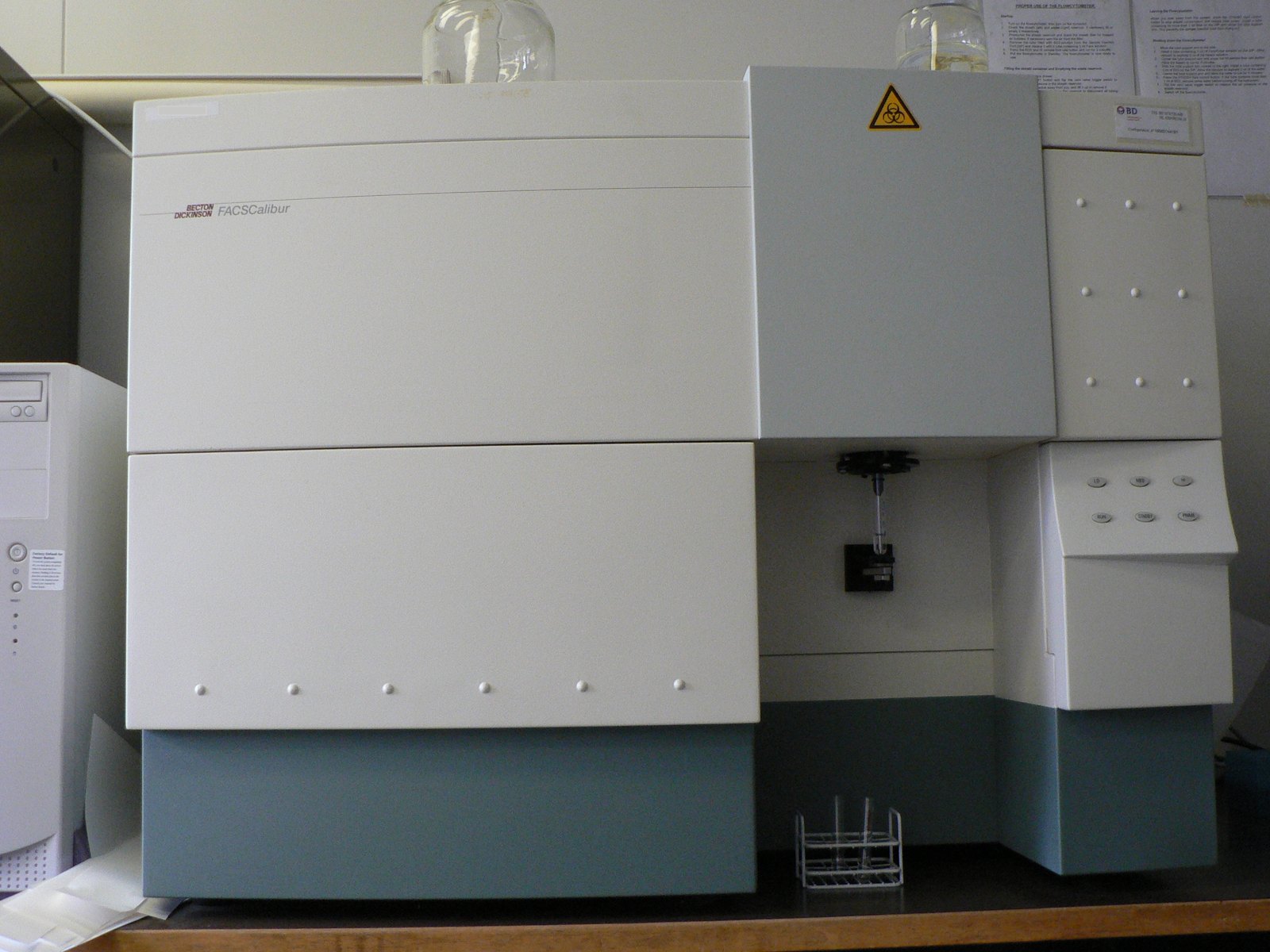
To be precise: the rule mainly targets “countries of concern” to the US, not EU states. The precedent matters, however: biotechnology laboratory equipment has officially entered the list of instruments that Washington considers relevant to national security. The list can be extended at any time, through the same procedure.
4Romania, a “Tier 2 partner” for AI chips (2025)
Also in January 2025, the US published the “Framework for Artificial Intelligence Diffusion”, a rule that divided the world into three tiers of access to advanced AI chips. Romania, the Czech Republic and Poland were in the second tier, along with other EU Member States, with import caps on chips.
The rule was withdrawn on 13 May 2025, a few days before it was due to take effect. The European Commission welcomed the withdrawal and stated that EU states should be able to buy advanced chips from the US without limitations. The lesson remains: for four months, an EU Member State’s access to a key technology depended on a classification made unilaterally in Washington.
It was not the only American decision favourable to Romania that changed in 2025: Romania’s inclusion in the Visa Waiver Program, announced in January, was suspended on 25 March and officially withdrawn on 2 May 2025, only a few days before it was due to take effect. Romania still has no timetable for returning to the programme.
5The Hague: the Chief Prosecutor of the International Criminal Court is left without e-mail (2025)
On 6 February 2025, the US imposed sanctions on the then Chief Prosecutor of the International Criminal Court (ICC), the British lawyer Karim Khan, in office since 2021. In May 2025, the Associated Press reported that the prosecutor had lost access to his e-mail address and had switched to Proton Mail, a Swiss provider.
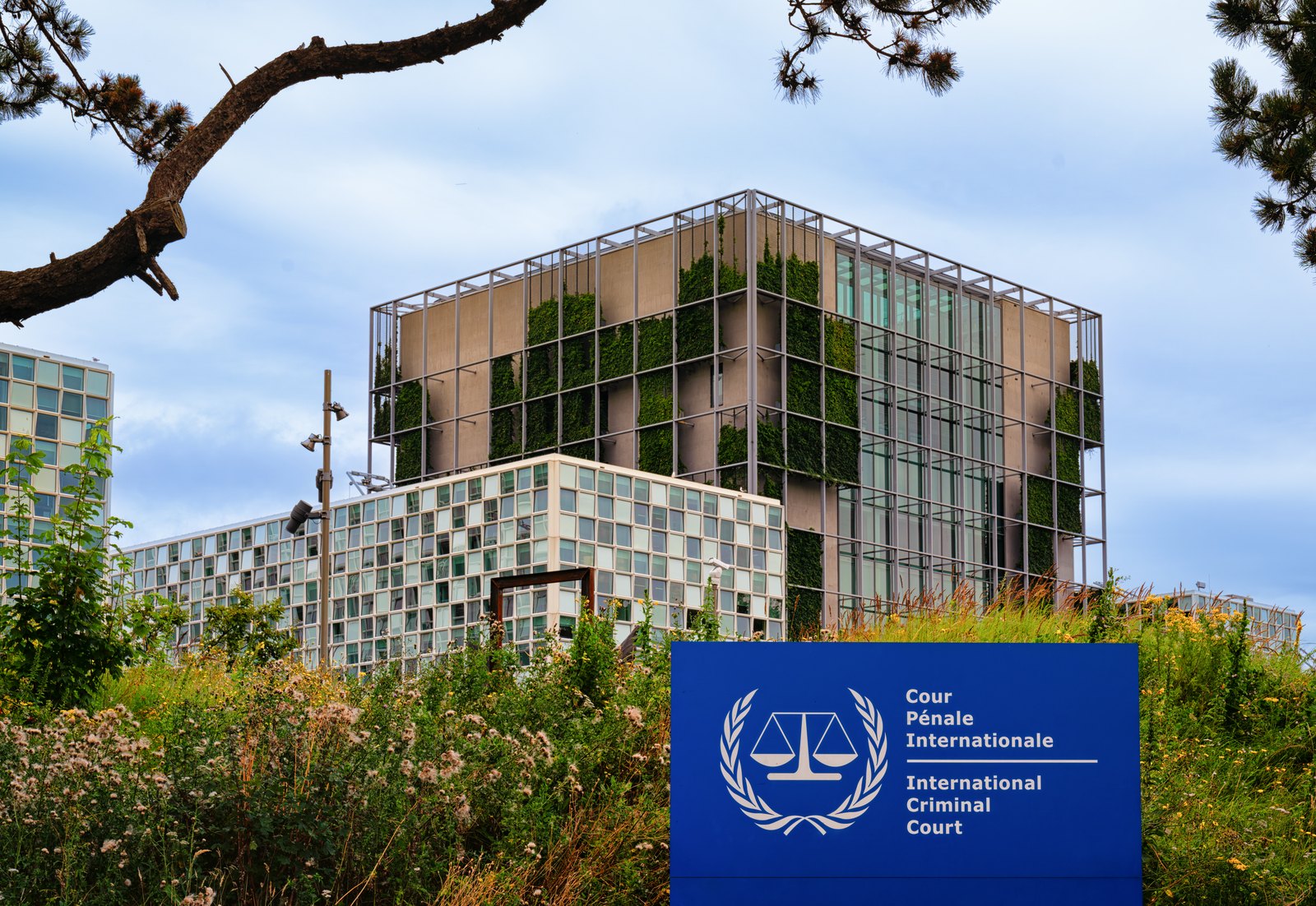
Who actually pressed the button is still disputed. Microsoft maintains that it did not suspend services for the ICC and that it was in contact with the Court throughout the process that led to the disconnection of the sanctioned individual. The Dutch press reported that Microsoft had allegedly told the Court that the sanctions obliged it to deny the prosecutor access, and that the ICC then suspended the account. In February 2026, Microsoft corrected, before the British Parliament, an earlier statement on this subject.
Whichever version is correct, the effect is the same: an international institution based in the EU lost a key person’s access to a work tool as a result of a decision taken outside the EU. In autumn 2025, the ICC decided to replace Microsoft Office with openDesk, an open-source suite developed by the German government’s Centre for Digital Sovereignty (ZenDiS).
6AI models switched off for all foreign nationals (June 2026)
On 12 June 2026, the US government issued an export control directive requiring the suspension of access for any foreign national, in the US or outside it, to the Claude Fable 5 and Claude Mythos 5 models, launched three days earlier. Because it could not verify users’ nationality in real time, Anthropic switched off the two models for all customers. The company’s other models were not affected. The controls were lifted on 30 June 2026, and access to Fable 5 was restored on 1 July 2026; Mythos 5 returned only for a set of US organisations.
Two observations. The first: the restriction targeted people by citizenship, not by country; a Romanian researcher in the EU was in the same position as any other foreigner. The second: for the first time, an export directive directly targeted access to an AI model, not just hardware. Lawyers at Greenberg Traurig described the case as an escalation in the use of export controls.
7The Microsoft outage of 12 November 2026
Not every outage has political causes. On Thursday, 12 November 2026, at 18:26 UTC, Outlook, Teams and Copilot went down for users in 74 countries. According to Microsoft’s status updates, cited by Control Plane, servers in the Exchange Online service failed automated checks and went out of service, and the load that was shifted to the remaining servers overloaded them as well. Recovery took more than 20 hours. Microsoft stated that it was not a cyberattack.
The case shows the second type of risk: even without any political decision, a centralised service operated from another continent can stop the work of millions of people at the same time. It is not the first episode: in January 2026, Microsoft 365 had another outage lasting almost 10 hours.
What these cases have in common
In none of these cases did the affected user do anything wrong. They paid, complied with the contract and used the product as intended. Access stopped because between them and the product there was a link controlled by someone else: an online account, a licence checked against a server, a company obliged to apply the law of the state where it is based.
The mechanism has three components:
- The manufacturer’s jurisdiction. A company based in the US, or with significant operations there, applies US sanctions and export controls. It has no choice.
- Dependence on a server. If the equipment or its software requires online authentication, licence verification or the cloud, the equipment stops when the server does.
- Cautious interpretation. When a rule is unclear, legal departments tend to restrict more than the law requires, as in the Adobe case.
What it means for a laboratory in Romania
For e-mail, alternatives can be found within a few days. For a 3D bioprinter, a cytometer or an imaging system, the situation is different:
- the equipment usually costs hundreds of thousands of lei and is bought with public or European funds, with usage and reporting obligations for the entire duration of the project;
- if the control software no longer starts, the hardware remains an expensive, useless object;
- if the firmware, spare parts or proprietary consumables can no longer be delivered, the 24-month warranty becomes difficult to honour in practice, even if the supplier remains bound by the contract;
- a research project stopped for a few months can miss reporting deadlines and lose publications and funding.
The probability that a particular piece of equipment will be affected is low. But the cost, if it happens, is high, and the cases above show that the probability is not zero, not even for EU Member States or international institutions.
How to assess the risk before purchase: 7 questions
These questions can be put to the supplier before bids are submitted. Those about operation can, worded neutrally and justified, become requirements in the technical specifications; the question about where the manufacturer is based and who owns it only helps to assess the risk, because the origin of the product or the manufacturer’s seat cannot be requirements in a public tender:
No answer removes the risk completely. Each favourable answer, however, removes one link from the chain, and the fewer links in the chain that are controlled from outside, the longer the equipment remains yours.
Where the equipment delivered by INOVUM fits in
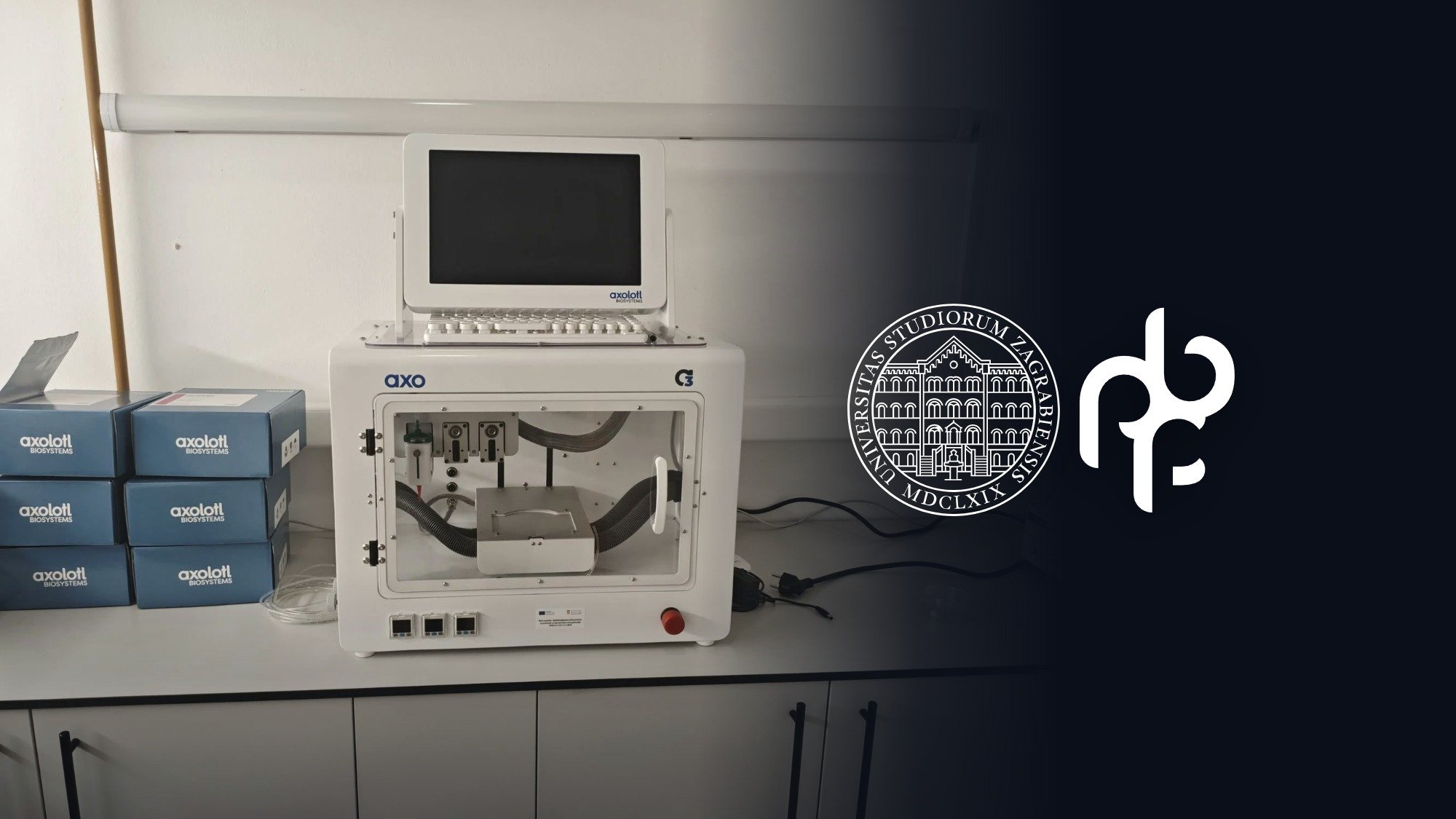
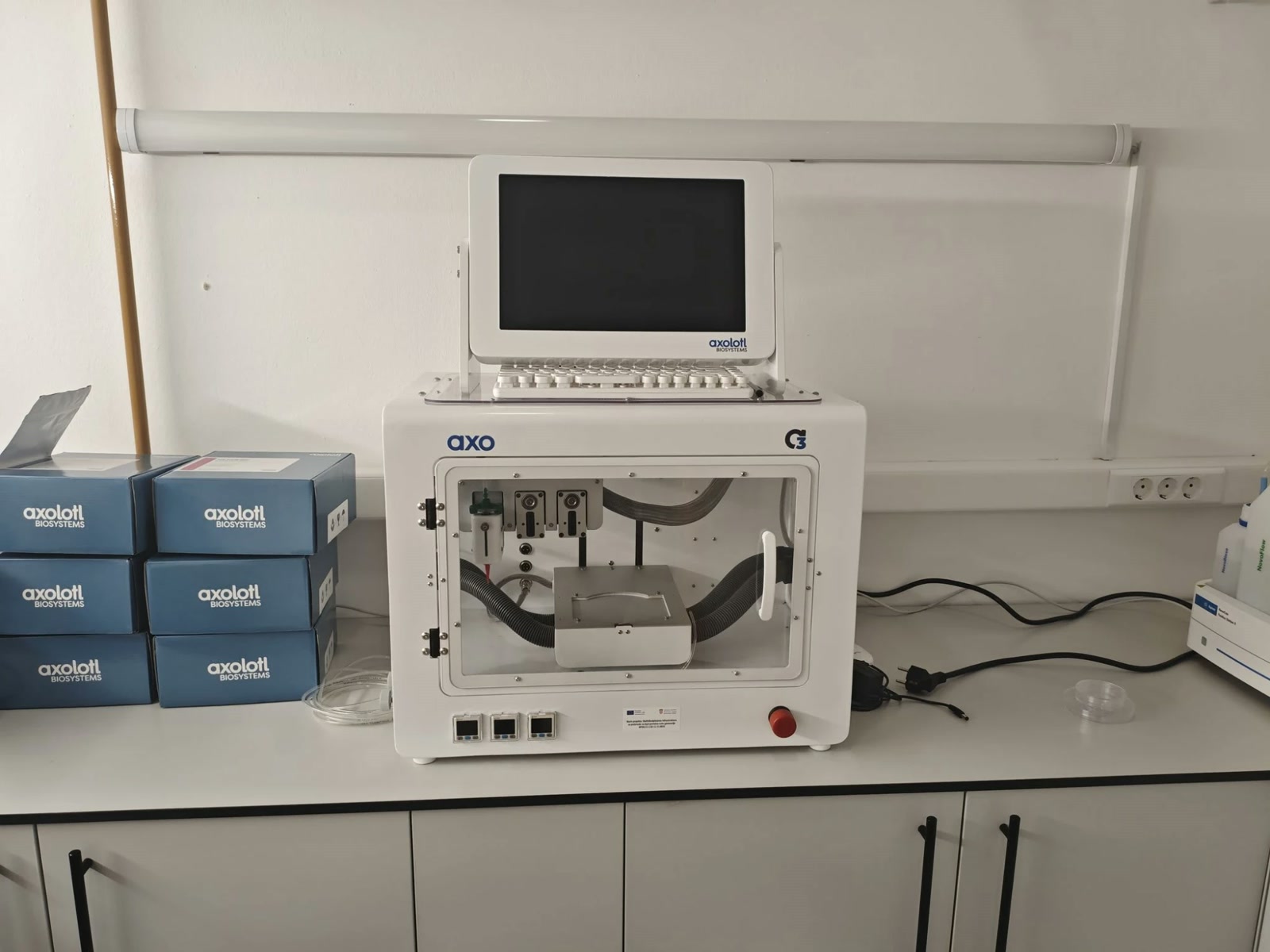
The 3D bioprinters delivered by INOVUM to USAMV Bucharest, the University of Zagreb, etc. are made by Axolotl Biosystems of Istanbul (at USAMV, the A6 model). INOVUM imports them directly from the manufacturer, and Turkey is part of the customs union with the EU for industrial products. Their software, in the configuration as delivered, works locally, without an online account or a licence verified in the cloud.
Frequently asked questions
Can a US decision block laboratory equipment bought in Romania? Directly, only if the equipment, its software or its services depend on a company that has to apply US law. The Adobe (2019), ICC (2025) and Fable/Mythos (2026) cases show that such restrictions have affected users outside the US, including in the EU.
Have there been American restrictions that also targeted EU Member States? Yes. The “AI Diffusion” rule of January 2025 placed Romania, the Czech Republic and Poland in the second tier of access to AI chips. The rule was withdrawn in May 2025, before it took effect. The June 2026 directive on the Fable 5 and Mythos 5 models targeted all foreign nationals, including those from the EU.
Is laboratory equipment covered by US export controls? Some of it, yes. Since January 2025, certain flow cytometers and mass spectrometers for proteomics have been subject to stricter export controls. The rule mainly targets countries considered of concern to US security, not EU states.
What happened at Microsoft on 12 November 2026? A global outage affected Outlook, Teams and Copilot in more than 70 countries, and recovery took more than 20 hours. Microsoft stated that it was not a cyberattack. The case is not about sanctions, but about dependence on a centralised service.
Are there similar cases in Romania too? Yes. The upgrade of the IAR-99 SM aircraft in Craiova was delayed by almost two years, partly because a security component reserved for NATO states could not be produced by the avionics supplier, and a piece of American equipment had not been contracted in time. In 2025, Romania’s inclusion in the Visa Waiver Program was suspended and then withdrawn by the US.
How do I reduce the risk when purchasing research equipment? Check whether the software works locally, whether the licence is perpetual, where the manufacturer is based, whether the consumables are open and where servicing is carried out. The requirements about operation (but not the manufacturer’s seat) can be included, worded neutrally, in the technical specifications.
Are you preparing to purchase a 3D bioprinter or other research equipment and want clear answers to these questions? Contact the INOVUM team.